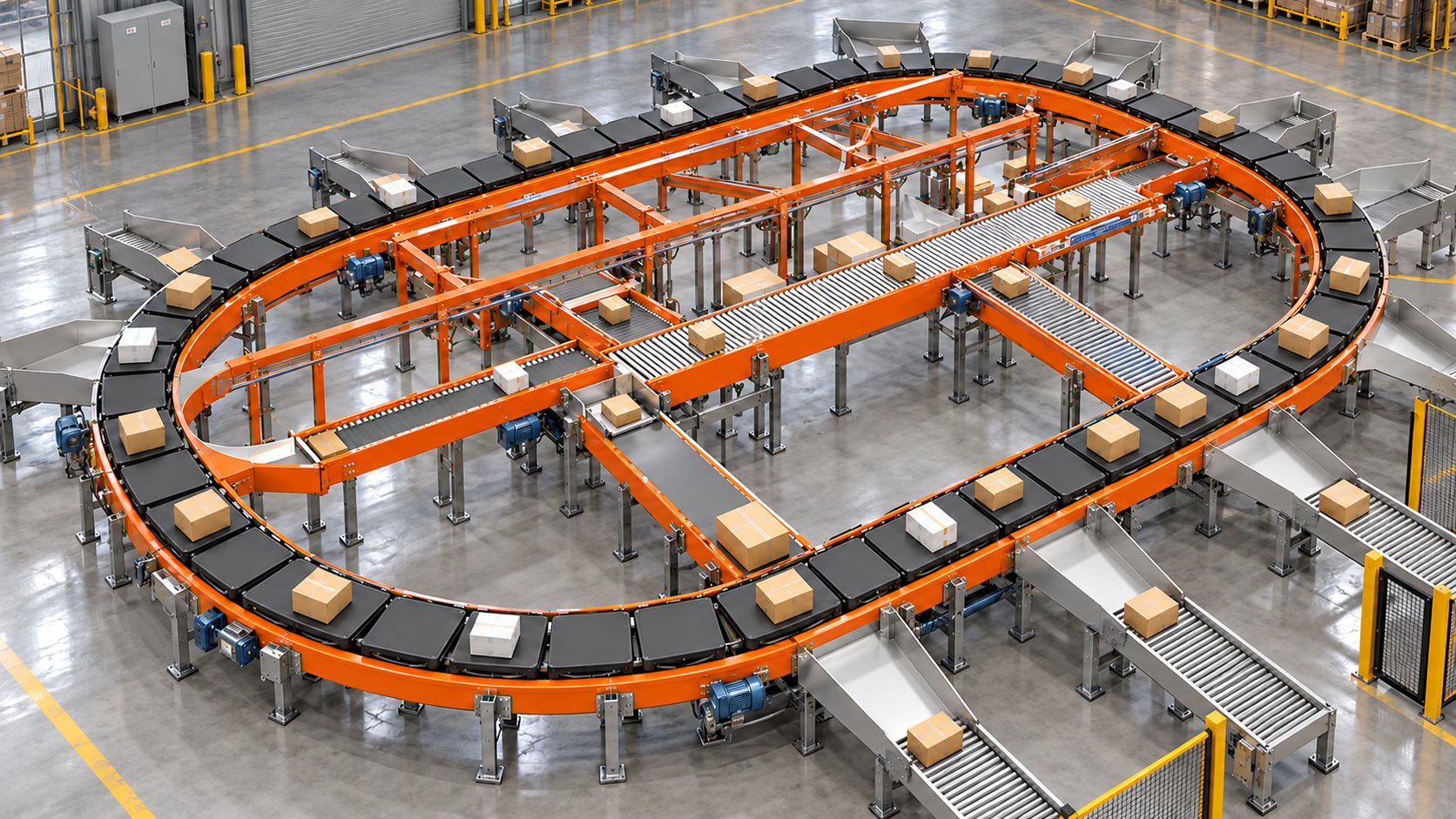
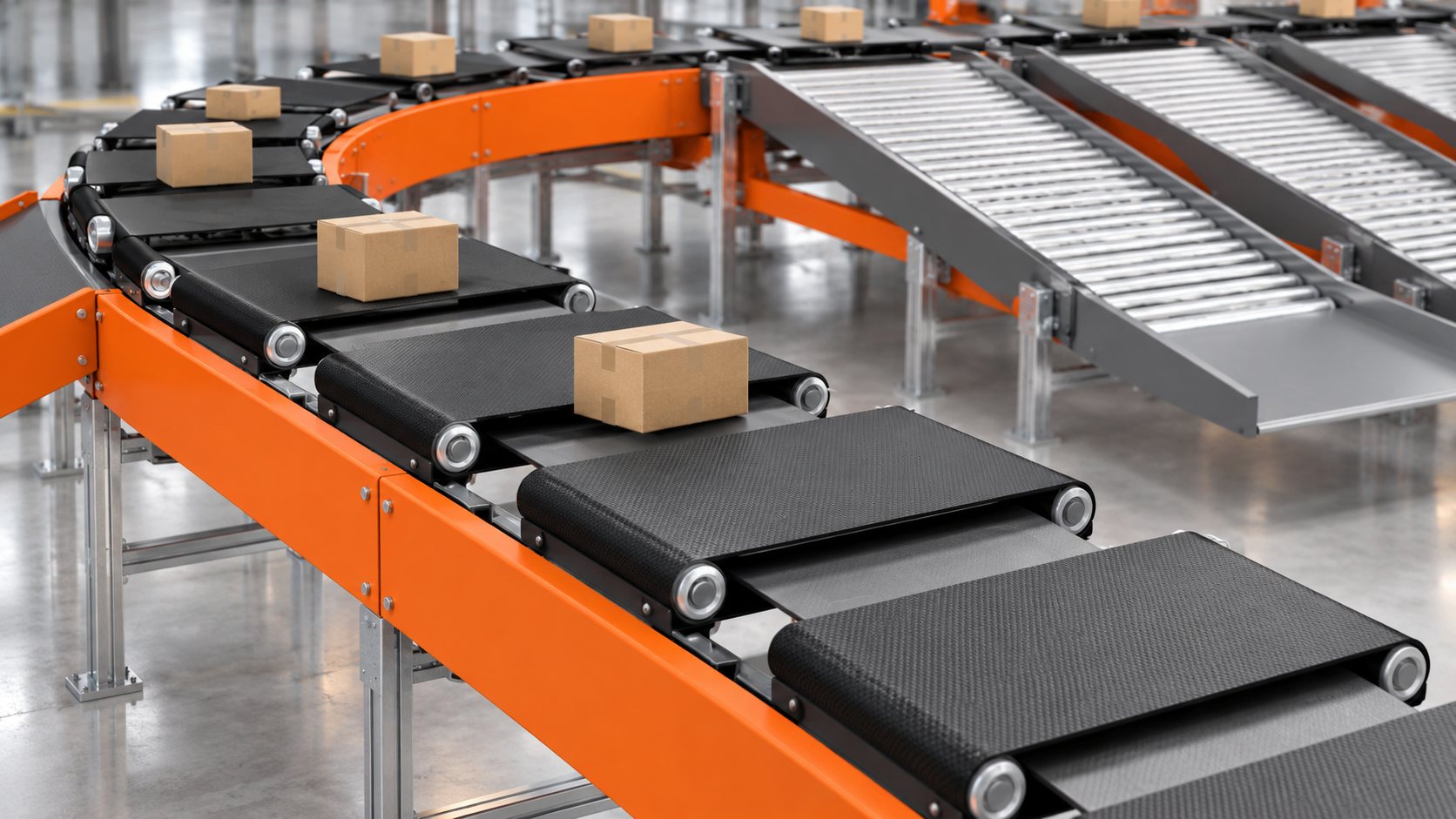
A cross-belt sorter routes individual parcels or cartons to multiple destinations. Each moving carrier has its own short transverse belt. An infeed presents one item to a carrier; identification and controls assign its destination; the carrier belt then moves the item sideways onto the selected chute or conveyor. Chin Wan Engineering can plan a sorting line around the product mix, required flow and warehouse layout in Malaysia.
How the sorter works
Products enter through a manual, semi-automatic or automatic infeed. A barcode reader or other identification method passes item data to the controls. The moving carriers track each item to its assigned destination. At the discharge point, that carrier’s belt runs across the travel direction to transfer the item to a chute or downstream conveyor. The controls also need a defined route for unreadable items, full destinations and system faults.
Reference configuration and technical checks
Technical material supplied for this sorter family lists the following example configuration ranges. They describe possible equipment choices, not a guaranteed specification for every Chin Wan project:
- Carrier pitch: 600, 750, 800 or 1,200 mm examples.
- Tray belt width: approximately 420-620 mm across listed variants.
- Maximum single-tray load: up to 30 kg in the listed configuration.
- Reference item envelope: up to 1,000 × 500 × 500 mm in the listed configuration.
- Operating speed: selectable examples from 1.2 to 2.4 m/s.
- Drive and infeed: linear-motor drive with manual, semi-automatic or automatic feeding options in the catalog.
Usable throughput depends on the item mix, feeding rate, destination count, scanning accuracy, carrier occupancy and downstream capacity. Confirm dimensions, load, speed and output with a project design and representative product testing before ordering.
Loop or linear arrangement?
A loop can offer discharge positions around the circuit and may suit sites with many destinations. A linear arrangement can suit a narrower route or different building geometry. The choice depends on floor space, clear height, maintenance access, fire and safety requirements, and how products enter and leave the line. Chin Wan can review both layouts against your plan.
Connecting sorting with ASRS, robots and warehouse systems
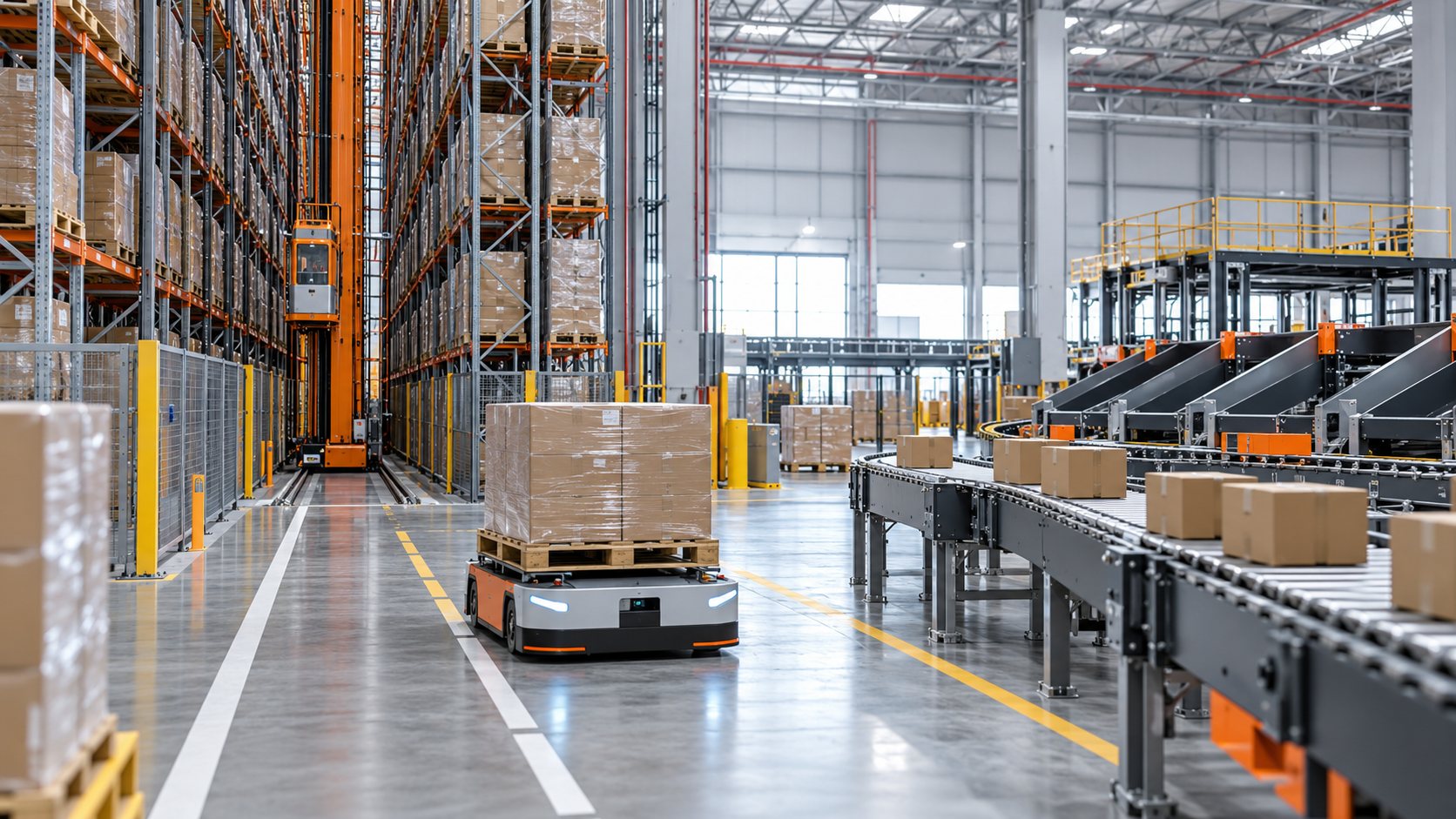
Sorting is one stage in a wider material-handling process. Chin Wan can discuss a warehouse automation scope that includes receiving conveyors, scanning, sorting, outbound accumulation and interfaces to a warehouse management system (WMS) or warehouse control system (WCS). An automated storage and retrieval system (ASRS) can move pallet or tote inventory to and from storage; robots or autonomous mobile robots can serve suitable transport or handling tasks. These are separate equipment functions with different payloads and safety needs. The transfer points, data hand-offs and recovery procedures should be designed together.
What to prepare for a proposal
- Item data: minimum and maximum dimensions, weight, packaging types, surface condition and samples of fragile or irregular products.
- Flow: average and peak items per hour, operating shifts, growth allowance and current bottlenecks.
- Destinations: number of routes, chute or conveyor positions, exception handling and what happens when a destination is full.
- Site: current floor plan, clear heights, column positions, access routes, power and maintenance clearances.
- Systems: barcode or other identification rules, WMS/WCS interfaces, tracking and reporting needs.
- Safety: guarding, emergency stops, access control and maintenance procedures.
Discuss your sorting project
Share your item list, flow targets and site plan with Chin Wan Engineering. We can review a suitable cross-belt sorter concept and its links to conveyors, robots or ASRS where those technologies fit the operation. Final performance, configuration, supply scope and commissioning requirements will be confirmed in the project proposal.
Contact Chin Wan Engineering to discuss a warehouse sorting project. You can also explore our belt conveyor systems and robotic palletizing solutions.